
Here in the UK, offshore wind remains central to the clean power strategy and ambitions of the country. We already have significant capacity, but with a target of at least 43 GW by the end of the decade and only a few allocation rounds remaining before the deadline, the progress made in the next few years will be critical.
2026 is shaping up to be a pivotal point in the UK’s offshore renewables pipeline – from major auction outcomes and large-scale construction activities, to whole new project milestones.
So, what exactly is on the roadmap for the year ahead?
Let’s dive in!
Smarter environmental tools for offshore wind…
NeuWave delivers high-resolution environmental intelligence that helps offshore wind developers understand marine conditions, manage risk, and support responsible project delivery from survey through operations.
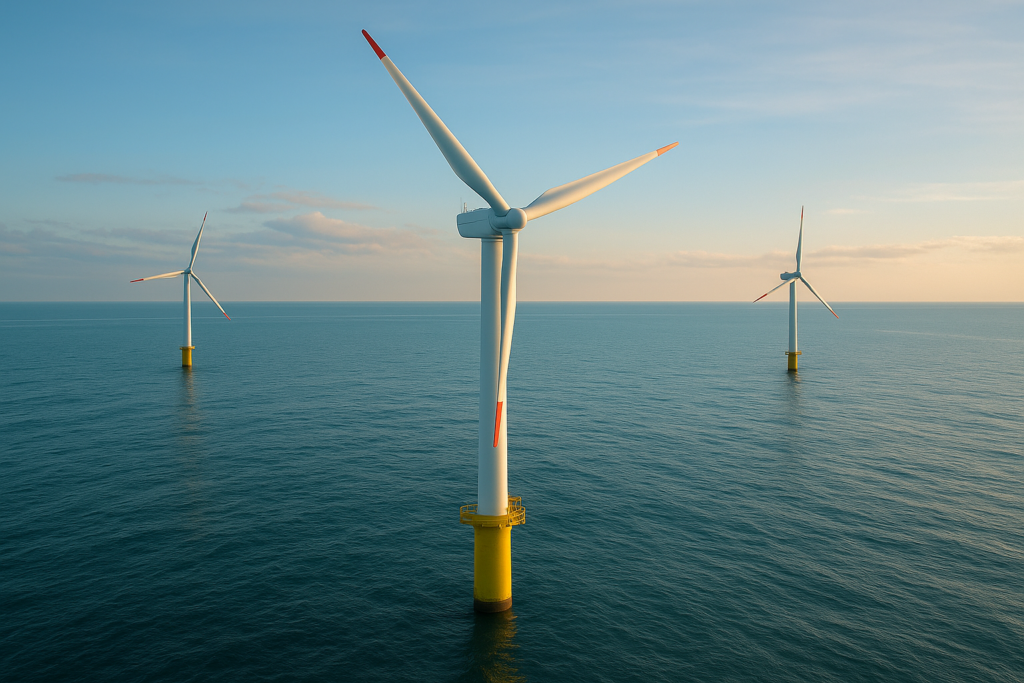
Record breaking auctions shaping the offshore wind pipeline
Capacity allocation auctions are the government’s primary mechanism for offshore wind development.
A record-breaking allocation round 7 (AR7) was closed at the end of 2025 – with capacity increases to the tune of around 8.4 GW planned for the UK’s offshore wind portfolio. That makes AR7 the largest offshore wind auction in Europe to date.
With over 25 GW of capacity across 17 projects competing, developer participation also shows that investors remain confident in the UK’s offshore wind market.
Whilst earlier rounds had been comparatively stagnant, the projects added through AR7 will generate enough electricity to power roughly 12 million homes. It hasn’t quite put the UK back on track for the end-of-decade clean energy targets, but we’re in a much better position than we were before.
An average strike price was settled at around £90/MWh. This reflects the rising costs of production and is indeed higher than previous years. However, this remains cheaper than new fossil fuel developments; and foreign natural gas imports are being made more expensive by geopolitical pressures.
Ultimately, investment in the grid will likely hike energy prices in the short term. The payoff is energy security and, eventually, less expensive energy from renewable sources.
Supporting the UK’s new offshore wind farms
It takes a long time to plan and build a wind farm, especially offshore. The projects agreed upon in AR7 won’t come online for at least a few years – once all financials are in place.
There are still several large offshore wind developments here in the UK that are moving through construction in 2026. These include significant expansions to the Dogger Bank project (already the world’s largest offshore wind farm) and other large North Sea developments. There continues to be significant focus on the northern half of the British Isles.
Aside from Dogger Bank, the UK is home to some of the world’s biggest offshore wind farms. Whilst that’s good news for production targets and ever-growing electricity demands, it also requires a robust and expansive supply chain – and the UK’s offshore wind supply chain is under pressure.
With the UK entering a phase where multiple gigawatt-scale projects are overlapping, they are also competing for resources (service vessels, port scheduling, skilled personnel, and physical space).
Projects such as Norfolk Vanguard are advancing supply chain agreements outside of the UK to address this. And in January (2026) the UK announced a joint fleet of offshore wind projects alongside Norway, Germany, and the Netherlands.
This highlights the scale – and the complex needs – of the UK’s future offshore wind ecosystem.
UK offshore wind energy targets – where things stand in 2026
The UK currently has around 15 GW of offshore wind capacity installed, with a significant pipeline under construction or contracted. At the end of last year the UK’s total wind power capacity (onshore + offshore) provided just over 32 GW to the grid.
To achieve the 50 GW target, we still need over 20 GW of offshore wind power installed before the end of the decade.
With the latest auction results, the pipeline does now include multiple gigawatts now expected to come online throughout the late 2020s. But it’s unclear whether this alone will be enough to meet the set goals.
The next few development cycles for UK offshore wind are critical.
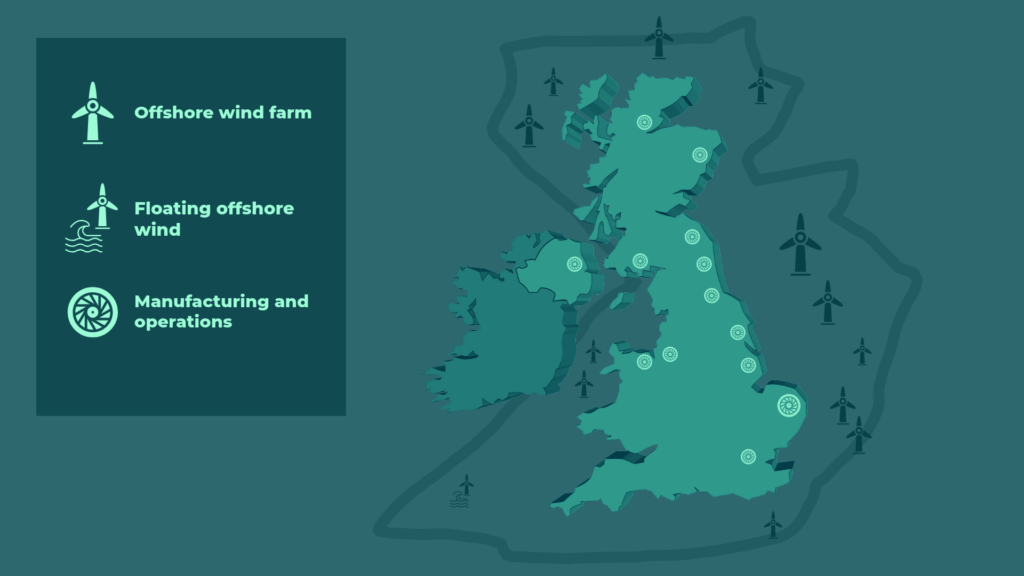
Policy and investment for UK offshore wind development in 2026
There are three broad core policy mechanisms or levels affecting offshore wind development in the UK. These are:
- The Contracts for Difference auction rounds
- Supply chain incentives such as Clean Industry Bonus
- Regional investment and job creation strategies
The UK’s offshore wind ecosystem has matured over the past few decades and recent capacity allocation successes signal renewed focus.
This has prompted tens-of-billions of pounds in investment, and will lead to the creation of thousands of new jobs in the next couple of years – providing both local and national level boosts to the offshore wind supply chain.
Policy frameworks are also evolving to address some of the challenges the sector has faced (rising material costs, inflation, and supply chain constraints). Government support mechanisms are being adjusted to keep projects commercially viable whilst maintaining long-term deployment targets.
Offshore wind policy is increasingly tied to industrial strategy, supply chain resilience, and long-term energy security goals.
Global context – the UK’s role in offshore wind expansion
Global installed offshore wind capacity surpassed 75 GW in recent years, and forecasts suggest this could exceed 300 GW by 2035 as more coastal states develop large-scale offshore projects.
Within that global landscape, the UK remains one of the most mature offshore wind markets. It was one of the earliest adopters of large commercial offshore wind farms, and continues to operate some of the largest projects currently in service.
In this context, the UK plays an important part in international offshore wind. Its auction frameworks, regulatory models, investment power, and supply chain development commitments have helped establish many of the commercial and operational benchmarks used elsewhere. The lessons learned from the UK’s early offshore wind adoption can influence how new markets approach financing and project delivery.
As offshore wind continues to scale globally, the UK’s experience will remain a key reference point – particularly as projects become larger, more complex, and increasingly integrated into wider energy systems.
Key challenges to watch in 2026
Despite strong momentum, several challenges remain for the UK’s offshore wind sector in the coming years.
- Supply chain capacity
The ongoing supply chain pressure is one of the most immediate concerns. Large projects require specialised installation vessels, turbine components, subsea cables, and highly skilled personnel. All of which are currently in high demand across national and global offshore wind markets.
As multiple projects move through construction at the same time, competition for these resources is likely to intensify further.
- Investment and financials
Project economics also remains sensitive to wider market conditions. Rising interest rates and materials costs have already delayed or reshaped several offshore wind developments internationally.
Maintaining a stable investment environment will be critical to keeping the UK’s offshore wind project pipeline on track.
- Infrastructure and the grid
Grid capacity infrastructure is unavoidable and will need to be further developed to support the growing demand for renewable energy and overall electricity consumption. New offshore generation must be matched by transmission upgrades and interconnector capacity to deliver electricity effectively to shore.
At the same time, developers must continue balancing rapid deployment with responsible environmental monitoring and marine ecosystem protection.
Offshore wind is increasingly becoming the backbone of the UK’s future power system. The scale of development now underway shows just how central it will be to the country’s long-term energy strategy.
Looking ahead, 2026 represents another important step in that journey. Record-breaking auctions, major projects progressing through construction, and evolving policy frameworks all point to continued momentum across the sector.
However, the focus is now shifting. Securing projects through policy and auctions was only the first stage. The real challenge – and opportunity – lies in delivering them efficiently, sustainably, and at the scale required to meet the UK’s ambitious offshore wind targets.
Unlock clearer environmental insight offshore…
NeuWave helps offshore wind teams capture clearer environmental data offshore, enabling smarter planning, stronger compliance, and more informed decisions throughout project development.