
The record-breaking success of offshore wind in the most recent Contracts for Difference (CfD) allocation round signals the importance of offshore asset investment and insurance for the UK’s energy ecosystem.
Expanding the country’s large-scale offshore infrastructure makes sense. Better energy security, more clean energy on the grid, local job market boosts, and broader economic benefits all follow. But scale brings exposure, and as offshore portfolios grow the industry relies on insurance frameworks that can accurately reflect operational risk over decades.
It’s a familiar tension for insurers and underwriters; and despite the need for precision, time-pressured decisions based on poor data still dominate insurance decisions within the industry, even as assets move into more complex sites and operate on tighter weather windows.
The result is a growing gap in how offshore risk translates to premiums. Ultimately, modern decision-making demands a level of precision and speed that legacy approaches struggle to provide.
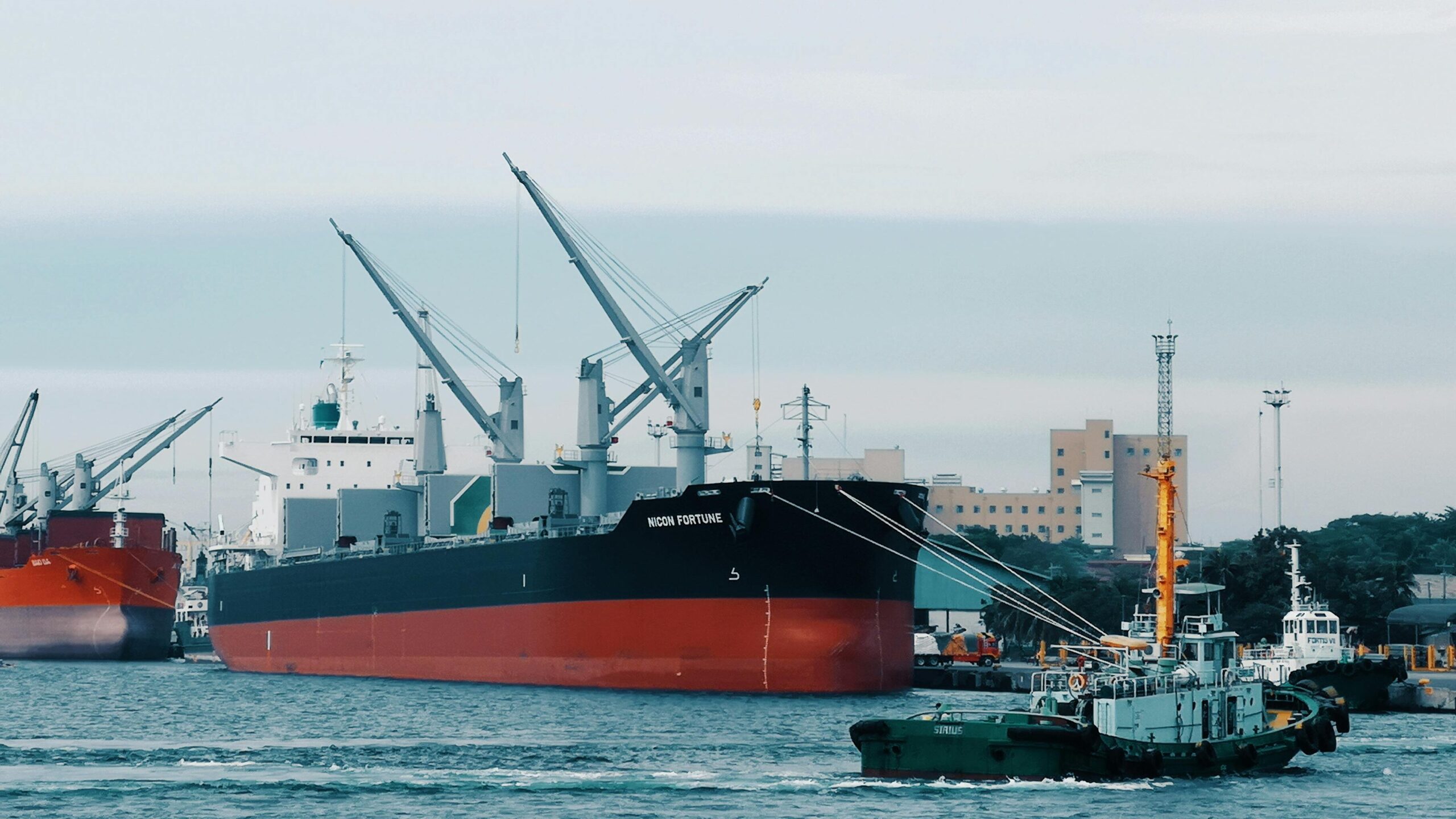
How does offshore wind insurance work?
When underwriting for an offshore wind farm development, insurance risk engineers are required to work through piles of documents for projects that they may know nothing about.
They’ll outline tasks, schedules, and expectations based on low-resolution data, and rushed decision making. The turnaround time here is usually a couple of weeks, further exacerbating the pressure.
More often than not, decisions are made based on the insurer’s history with the operator, rather than precise site and project specifics. For new operators and developers, or those operating in new sites, this obviously isn’t ideal – there isn’t much history to go off of.
When “acceptable conditions” still lead to claims
Offshore assets are under constant physical stresses, often located in extreme and hostile environments. You could be forgiven for expecting the majority of offshore insurance claims to be the result of storms or unexpected weather events, but that isn’t usually the case.
Most offshore claims actually come from missing marginal weather decisions (incorrect weather windows) and unexpected asset failures, caused by design or planning that doesn’t account for accurate local wave behaviour. According to our market research, essential repairs are delayed due to an inability to access required offshore sites, and this is a major source of claims.
The existing offshore insurance practices rely on broad stroke patterns, rather than the short-period, site-specific waves that impact assets on a daily basis.
Loss prevention starts before the policy is ever tested
In 2024, the International Union of Marine Insurance (IUMI) reported zero catastrophic events. It’s the everyday offshore conditions and project decisions that primarily shape insurance outcomes, not the extraordinary.
Understanding local wave or weather patterns, and being able to accurately predict future environmental conditions, allows developers and insurers to back assets that are future-proofed (or are at least truly viable for their location, purpose, and lifespan).
What does this mean in practice?
- Fewer preventable (and potentially predictable) claims being processed
- Fewer near-misses that can affect reinsurance prices
While there are notably few large losses and catastrophic events, it’s the attritional losses that remain high and result in claims, according to the IUMI. As offshore activity scales, so too will these “everyday” events and claims. Over time, these will bottleneck insurance processes, and can affect premium prices.
Insuring assets that live offshore for decades
Offshore infrastructure needs to remain viable for its entire intended lifetime, and this usually spans decades. As outlined by the JNRC, asset failures can be caused by design and materials error, wear and corrosion, fatigue damage, fabrication defects, or installation and operational errors – not all of which can be accurately predicted at the conception stage with legacy methods.
The offshore insurance industry isn’t dealing with short-term assets; and an offshore wind farm or subsea cable system is exposed continuously to hostile marine conditions throughout construction, commissioning, operations and maintenance, and eventually decommission or repowering.
These assets represent a long tail of risk, evolving with shifting climate patterns and site conditions, wear and tear, and changing operating practices.
Underwriters have relied on snapshots of limited data or coarse regional models to set terms for decades of asset coverage, but those snapshots miss the subtleties of how wave climates evolve and how offshore conditions compound over time.
What’s needed instead is longitudinal visibility: high-resolution time series that quantify exposure throughout the asset lifecycle and across different environmental regimes. This kind of longitudinal insight is increasingly seen as a competitive advantage in a maturing offshore market.
When underwriting decisions can factor in detailed historical and forecast metocean behaviour, capital allocation becomes more strategic and risk aggregation more transparent; and it allows for more accurate premium and payout prices.
Risk pricing runs deeper than regional averages
The ocean is, obviously, massive; and it doesn’t all behave the same. Even sites that seem to be close together can exhibit diverse behaviours, and carry very different wave exposure levels below the surface. Accurate underwriting for offshore assets requires a careful balancing and deep understanding of precise data, applied effectively.
As confirmed by independent trials, construction consultants are underestimating maintenance costs by up to £250,000 per turbine per year, when using low-resolution wave data. If O&M costing is off by this much, then claims predictions are, as well.
With NeuWave tools, rather than assume how waves behave based on broad regional models, insurers can assess decades of historical wave behaviour at a scale relevant to their unique project or asset requirements.
It’s simple: Better readability → Improved clarity → Accurate insurance prices
Moving beyond regional averages to high-resolution, accessible hindcast environmental intelligence makes underwriting more precise, defensible, and aligned with the actual behaviour of the sea. A stable and reliable foundational system that the offshore insurance industry can build on as exposure grows, and projects expand.
Turning wave data into shared understanding
Having great data is one thing, but actually using it effectively is another entirely. Offshore insurance has historically struggled with technically correct, but operationally unusable data sets.
Data that can only be deciphered and applied by a specialist creates a disconnect between parties, and creates friction throughout insurance systems – slowing decisions and encouraging back-and-forth clarification rather than confident action. And this just isn’t viable in the current underwriting system.
The solution to this problem is data converted into usable, accessible tools. Interactive, no-code dashboards and integrated platforms turn complex metocean data into clear and relevant insights. In short, they deliver data that can be read and understood even without deep oceanographic expertise.
So, what are the benefits?
- Faster alignment on coverage terms
- Less confusion or error when it comes to claims
- Fewer disputes driven by misinterpretation
It isn’t a complicated principle, all product developers understand that a well-designed interface acts as a common language between stakeholders. And this clarity is a risk-management tool in its own right.
The quiet shift in offshore insurance – NeuWave’s Risk Register tools
The insurers who lead will be those who can price risk accurately and help prevent losses before they occur. To do this consistently, they need to understand real site conditions.
NeuWave’s Risk Register analysis tools turn complex wave intelligence into something underwriters can use quickly and confidently.
From data to decisions
We identify realistic weather windows for a specific site, then map offshore tasks against time of year in clear, colour-coded risk tables. The result is a fast, visual way to understand when activities are lower or higher risk, skipping the endless 100-page technical reports where not necessary.
Layered for different levels of need
Not every insurer needs the same depth.
Step one is a high-level regional risk view that supports those with smaller exposure, for speedy decisions that don’t skip on due diligence.
Then, if required: a bespoke wave model, detailed risk register, and insurance-focused narrative (approx 5 pages) supports lead insurers setting terms and carrying the largest share of risk.
Why it matters
Greater accuracy supports more defensible underwriting and, ultimately, more competitive premiums. Over time, this intelligence can also feed into ongoing operational decisions to help stakeholders actively reduce risk as plans evolve offshore.
As offshore portfolios grow and operational windows tighten, the limits of regional averages and static assumptions become increasingly clear. Environmental intelligence, backed by high-resolution hindcast data, is fast becoming a core input to how risk is priced and managed.
Precision requires clarity on how the sea actually behaves at a site, how decisions are made under real conditions, and how exposure evolves over time. And that’s what NeuWave delivers. The question now is whether offshore insurance continues to rely on approximation, or begins to rethink how wave risk is truly understood.
Most offshore claims aren’t caused by storms…
They’re caused by poor data and inaccessible tools. NeuWave’s high-resolution environmental intelligence tools are supporting insurers and offshore developers to reach better decisions and better prices.