
With the record breaking results of last year’s Contracts for Difference (CfD) round being released earlier this month, a number of these are now heading towards final investment decisions. Building a wind farm doesn’t happen overnight, and these aren’t expected to fully finalise for a few months, with other projects only beginning their FIDs in 2027.
Here’s everything we know so far.
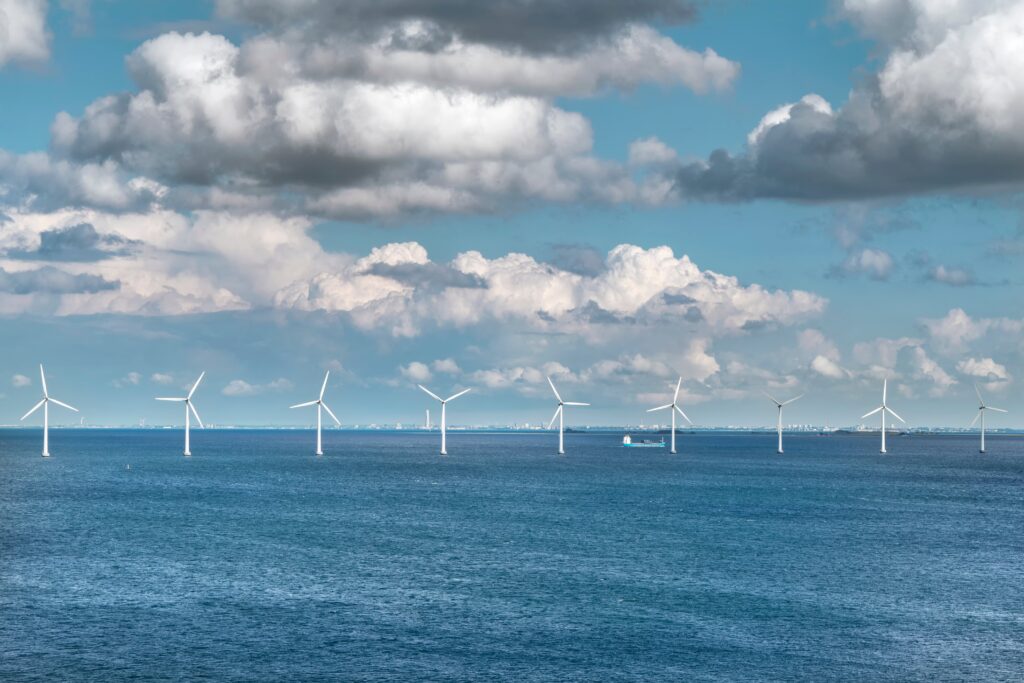
First served projects – RWE in CfD Round 7
The first-served projects of the latest CfD round are those being developed by RWE, including expansions to the already massive Dogger Bank offshore wind farm site. There are four large RWE projects included, having secured the largest capacity share in Allocation Round 7 (roughly 6.9 GW of capacity).
The first two projects (Norfolk Vanguard East and West) are expected to reach FIDs by the summer of this year. Projections for the others – including Dogger Bank – are still unclear, but will likely be sometime in early 2027.
Notably, RWE has also struck a strategic 50% partnership with KKR on the Norfolk Vanguard sites, bringing in institutional capital to co-develop and operate these assets.
FIDs projections for other projects
Obviously, RWE wasn’t the only benefactor of the AR7. SSE was also awarded considerable capacity, and has announced that they will progress Berwick Bank B towards final investment decisions (expected to close in 2027). If built out to its full potential of roughly 4.1 GW across three phases, Berwick Bank could become one of the world’s largest offshore wind farms, anchoring significant new capacity off the east coast of Scotland.
Aside from the record levels of offshore wind capacity awarded, Allocation Round 7 was notable for the first appearance of Floating Offshore Wind (FLOW) projects within the CfD portfolio. (*two of them, to be exact!)
The smaller of these FLOW projects, Pentland (developed by Highland Wind), secured impressive investments in November 2025; and the larger, Erebus, is expected to come online by the end of the decade.
What does this all mean?
It’s been 25 years since the very first were erected off the British coastlines, and there are currently 47 operational offshore wind farms around the country; supplying approx 16 GW of clean power capacity.
After decades of sustained policy support and strategic approach (like the Contracts for Difference) offshore wind has transitioned from a nascent technology to a core pillar of the UK energy mix.
In 2024, offshore wind alone provided over 34% of renewable electricity and around 17% of total UK electricity generation, making it one of the largest single contributors to all grid power nationwide.
The industry has also become a significant employer and economic engine: nearly 40,000 people work directly in offshore wind today, with broader wind sector employment exceeding 55,000. Those figures are set to rise sharply as new project deployment accelerates toward 2030.
In short, the quicker we can get new projects funded and online, the more clean energy goes into the UK’s grid — and the more the economy benefits from these infrastructure investments.
As projects progress toward FID, AR7 is already doing what it was required to do following lackluster previous rounds – restoring investor confidence and unlocking large-scale deployment.
With developers advancing multi-gigawatt portfolios and floating wind entering the CfD framework, the UK is reinforcing its position as a global offshore wind leader; with tangible project delivery.
Smarter offshore decisions start with smarter wave data…
NeuWave delivers high-resolution, engineering-grade wave and metocean data to support offshore wind planning, installation scheduling and operational risk reduction. Helping teams make confident decisions earlier and avoid costly weather-related delays.