It’s been three years (as of the end of November, 2025) since OpenAI unleashed ChatGPT upon the world.
Since then, AI has become a bit of a buzzword; and synonymous, at least in the popular understanding, with large language models (or LLMs) such as Google’s Gemini, Chinese-developed DeepSeek, and of course ChatGPT itself.
But this narrow association has also created a distorted picture of what AI truly is; and what it’s capable of. The public conversation fixated on chatbots and novelty tools, overshadowing the far broader field of applied intelligence reshaping science, medicine, industry, and the environment.
As the initial excitement settles, we’re left with a simple but important question: which applications of AI will genuinely shape the future of our global industries?
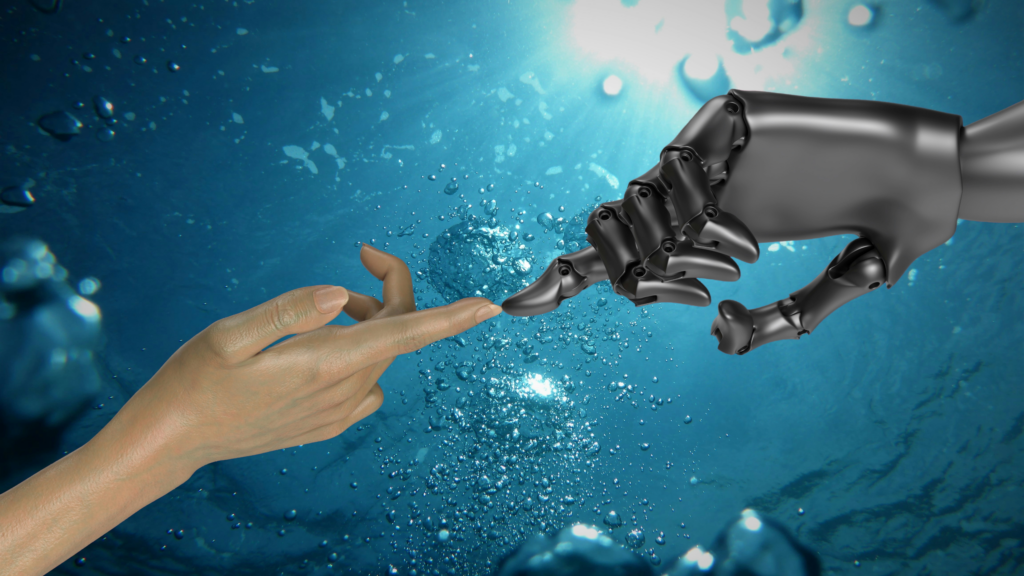
Misunderstanding the potential of AI – Inflating the bubble
Anyone who isn’t living under a rock at the bottom of the ocean (hello, Patrick!) will likely be familiar with the term AI by now. Since the release of ChatGPT at the end of 2022, generative artificial intelligence tools have been widely available — and widely discussed — for the first time.
In the beginning, this felt like a revolution, and not just to the general public. Investment in products, services, and companies even simply invoking the name of AI skyrocketed, leading many to speculate comparisons with the so-called “dot com bubble” of the 1990s.
As it turns out, these comparisons may not be wholly inaccurate.
The uses of LLMs have proven to be novel and limited, and public interest is largely considered to be waning. Even the frontrunners such as OpenAI are struggling to turn their models into actual profit.
As organisations rushed to bolt generative language models onto products, expectations ballooned far beyond what the models were built to do. And now the hype has inevitably cooled, people are confusing the slowdown with a broader failure of artificial intelligence itself.
But the real frontier of AI isn’t in generating meme images and repetitive blog content.
Bursting the bubble of popular perception
Part of the challenge is that LLMs have become shorthand for “AI”, when in truth they represent only one branch of the artificial intelligence evolutionary tree.
LLMs excel at pattern recognition across language. They’re brilliant at text and can generate convincingly realistic images (sometimes), but they are not autonomous systems; and they can’t reliably execute high-stakes tasks that require precision, reasoning, or verified outputs.
Their strength sits firmly in probability, rather than accuracy. In short, their goal is to sound smart.
Commercial AI, on the other hand, is designed with a fundamentally different goal: solving real-world, economically valuable problems with measurable outcomes. These systems blend machine learning, physics-based models, sensor data, computer vision, optimisation engines, and domain expertise.
The goal is accurate, applicable results. Whether that’s predicting equipment failures, modelling supply chains, supporting medical decisions, optimising vessel routes, or something even more niche.
Commercial uses of AI that will change the world
Popular opinion surrounding AI has dipped recently for a number of reasons. Generative AI ‘slop’ threatens many in creative and administrative roles, and is largely considered to have lowered the quality and credibility of the content we engage with online every day.
But, despite popular perception, there’s more to AI than LLMs. NeuWave is a testament to this (but more on that later).
First, let’s shed some light on and celebrate some of the fundamentally ground-breaking, and sometimes potentially life-changing, commercial applications of artificial intelligence and machine learning.
Medical AI – precision over generalisation
Purpose-built AI tools have the potential to shape and reshape lives in so many ways, but they have the potential capacity to save lives, as well. Healthcare is where commercial AI quietly outpaces the popular hype.
Machine-learning diagnostic tools can now detect certain diseases such as COVID-19, heart conditions, and some cancers earlier and more accurately than traditional screening alone. Imaging models support radiologists not by replacing expertise, but by reducing error rates and picking up patterns humans often miss.
Predictive analytics can flag patient deterioration before it becomes critical, improving outcomes and reducing hospital strain. This version of AI is built on evidence, verification, and rigorous clinical validation rather than predictive text generation.
Education – tailored learning experience
Specialised AI is also expected to revolutionise teaching, with a shift from standardised teaching towards more adaptable pathways, tailored to each student.
There are prominent and credible dangers posed to education and learning by AI when wrongly used. Reliance on generative LLMs for research and writing will over time inhibit students’ critical thinking abilities.
Correctly implemented, commercial learning platforms are able to use machine-learning models to analyse performance, identify knowledge gaps, and optimise lesson difficulty dynamically and in real time. Instead of every student moving at the same pace, AI can give struggling learners targeted support while accelerating advanced learners.
It also has the potential to alleviate educators from administrative load, letting them focus on teaching rather than paperwork.
Scientific discovery – accelerating breakthroughs
AI is rapidly becoming a core engine of cutting-edge scientific research.
Machine-learning models can screen billions of potential drug compounds in days rather than years, dramatically shortening the early phases of pharmaceutical development.
Material science is also being reshaped by algorithms that design novel materials with tailored properties. And in climate science, AI-driven simulations help researchers model extreme weather, predict ice-sheet behaviour, and optimise renewable-energy systems with far greater accuracy.
The future of scientific discovery includes the careful development of active research tools that reimagines how fast humanity can learn, test, and innovate.
Environmental intelligence – real-world decision support
Environmental AI systems combine physics-based modelling with live ocean, weather conditions, atmospheric, and satellite data to support decisions and planning.
From predicting vessel-safe weather windows and mapping biodiversity risk, to optimising offshore wind farm layouts, these systems bridge the gap between raw data and actionable intelligence.
They reduce operational risk, improve safety, and support long-term environmental resilience.
This is applied AI at its best: grounded in real measurements, directly tied to commercial value, and designed to solve problems far too complex for humans to calculate alone.
Speaking of which…
NeuWave, machine learning, and our AI algorithms
NeuWave’s AI capability is built on a foundation of high-resolution environmental data and physics-based modelling. Our in-house systems draw on live buoy feeds, decades of metocean hindcast records, and newly integrated satellite observations to generate predictive intelligence that operators can trust offshore.
These models analyse wave behaviour, tidal cycles, wind patterns, and broader ocean conditions to produce clear, decision-ready forecasts, not generic outputs or static summaries.
Every dataset is processed through physics-driven algorithms designed to reflect how the marine environment actually behaves, ensuring accuracy in complex or rapidly changing conditions.
This intelligence powers the core of the NeuWave platform: environmental window predictions, route risk assessments, automated report generation, and accessible visual layers that translate dense data into actionable insight.
The result is environmental intelligence that helps offshore teams plan with confidence and reduce operational uncertainty.
Ultimately, we’re just here to remind you that AI has much more to offer to society than stolen jobs and repetitive content.
NeuWave itself is living proof of this, amongst the countless other companies around the world that are working to develop groundbreaking tech and machine learning algorithms with the ability to change industries and lives.
*TLDR: Even if you cancel your ChatGPT subscription, don’t lose all faith in the future of AI!
Real intelligence, real applications, real results…
Ocean accessibility at a level of clarity that traditional tools can’t match. NeuWave transforms complex environmental data into project-scale confidence via our adaptive, accessible, visual platform.