
Offshore wind is one of the fastest-growing renewable industries on the planet. In this NeuWave Back to Basics series, we’ll unpack the foundations of offshore wind: technology, regulation, and what’s coming in the future.
Whether you’re a policymaker, student, or just offshore-curious; this series is your field guide to the forces shaping the future of clean energy – right from the mouth of those in the centre of the storm, developing the tools of the industry’s future.
We’ve already learned the difference between onshore and offshore wind, so let’s dive into how offshore wind actually works.
Regulation-ready, purpose-built environmental intelligence…
NeuWave’s intelligent MetOcean tools offer industry-leading precision data for offshore planning, forecasting, and operational confidence, available via API or dashboard.
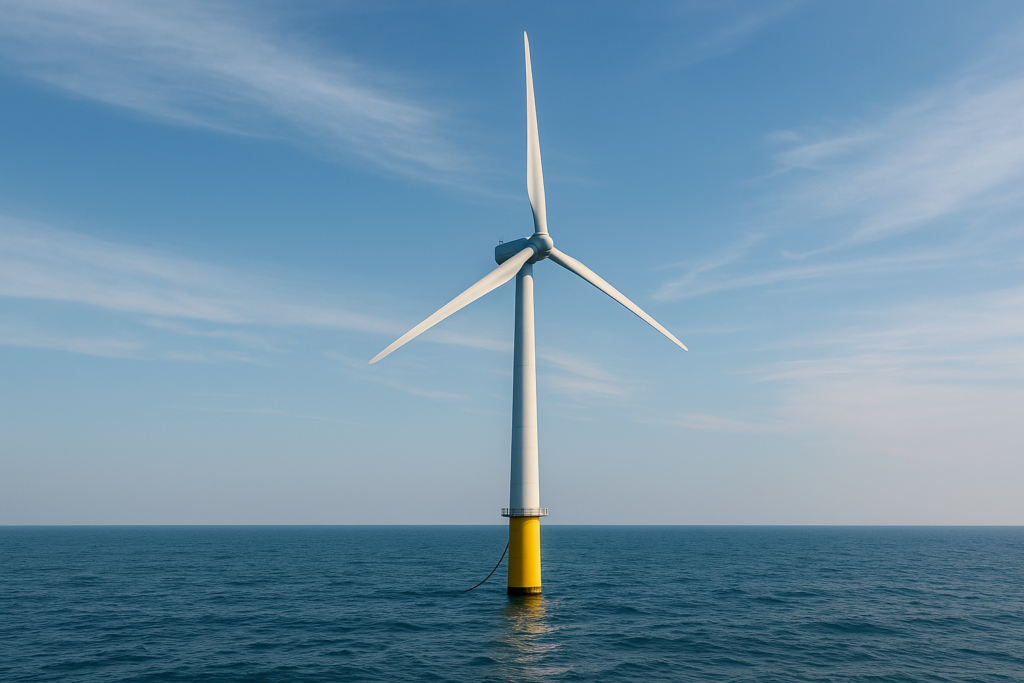
Offshore vs Onshore Wind
It’s somewhat self-explanatory, but onshore wind is the power generated by turbines located on land; with offshore wind farms harnessing the power of the winds at sea.
Because of higher wind speeds and consistencies, and lack of physical human interference, offshore wind farms are generally considered more favourable. It’s not always a cut-and-dry choice, though, and there are positives and drawbacks to both kinds.
| Advantages | Disadvantages | |
| Onshore Wind Farms | Reduced environmental impactMore cost-effectiveQuicker installation and easier maintenance | Winds often less consistent and not as strongSignificant human impact (considered undesirable to live nearby, etc.) |
| Offshore Wind Farms | More energy efficientMore space for constructionLess human impact once built | More difficult to build and maintainHostile, changing environments |
When was the first offshore wind farm built?
Humans have been harnessing wind energy for a long time. For thousands of years we’ve travelled on the wind down rivers and across seas; and used it to push pumps and windmills for food production and building works. And since the 1850s, we’ve had the tech to convert wind energy into electricity.
The world’s very first offshore wind farm, Vindeby (Denmark) was built in 1991. Its 11 turbines provided power to over 2000 homes, and an essential proof of concept for the scalability and feasibility of offshore wind.
The UK followed suit by 2003 with its first offshore wind farm in Blythe.
Which countries have the most offshore wind?
In the late 2000s politicians across the world were responding to increasing demand for action against climate change. While the first generation of wind farms were modest in size, by 2020 there are individual farms capable of powering over 1 million homes.
As of April, 2025, there are 138 offshore wind farms operating in China – giving it the largest global industry capacity.
| Country | Number of farms (Apr. 2025) |
| China | 138 |
| UK | 51 |
| Vietnam | 42 |
| Germany | 32 |
| Netherlands | 21 |
| Denmark | 16 |
| Belgium | 11 |
| Taiwan | 10 |
| Norway | 6 |
Despite being a much smaller state, the UK isn’t comparatively far behind. It also has the world’s largest offshore wind farm, Dogger Bank.
The current leaders are way ahead, but the offshore wind industry is undoubtedly growing globally. Propelled by ever-increasing enthusiasm for clean energy projects in light of climate change concerns, there’s no reason to assume this trend won’t continue.
How do offshore wind farms work?
At its core, the basic principle behind offshore wind power isn’t too different from that of traditional windmills. Turbines convert kinetic wind energy into mechanical energy.
When it comes to offshore wind, this mechanical energy is then converted by a generator into electricity, transported through subsea cables to onshore substations, and then diverted to the national grid. In extremely short terms, that just means:
Wind spins blades → rotor turns → generator creates electricity.
There’s obviously quite a bit more to it than that in practice. The manufacture and construction of turbines takes energy itself, however this is usually offset by the renewable energy produced in less than six months.
Offshore wind farms also require constant monitoring by both onshore and offshore O&M teams, meaning a whole fleet of trained professionals, as well as specialised boats and equipment.
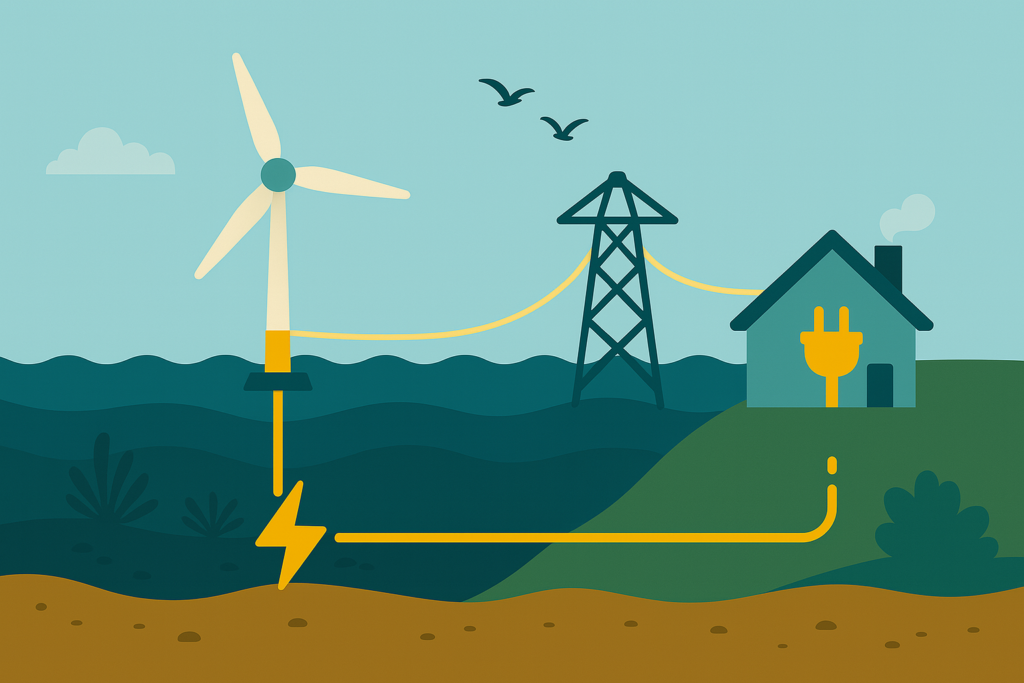
Site-specific environmental conditions dictate turbine type, spacing, cable design, and O&M strategy. And this takes 24/7 environmental data from initial development to final decommission.
Cutting-edge tools for industry-wide bottlenecks…
NeuWave’s 500m resolution data beats industry-standard weather window estimations and reduces false downtimes. That means you’re constantly improving safety and increasing your offshore wind project ROI.
How are offshore wind turbines installed?
While the physical assembly of each offshore wind turbine may only take a few days, real-world installation can stretch months. Offshore construction is entirely dictated by the moods and changes of the sea, and everything hinges on securing a suitable weather window. Missing this can set a project back by weeks.
For traditional, fixed-bottom turbines, installation begins with preparing the seabed. Foundations (usually monopiles or jacket structures) are driven or drilled into place at depths of up to 60 metres. These foundations must be perfectly aligned and secured to withstand decades of dynamic loading from waves, currents and turbine thrust.
Next, installation vessels or jack-up rigs position themselves on site. Jack-up rigs lower legs to the seabed, raising themselves above the waterline to provide a stable platform. The tower, nacelle, and blades are then lifted and assembled in stages using cranes with precision tolerances measured in millimetres. A single rogue swell can put the entire process on hold.
Installing offshore wind turbines is dependant on four key variables:
- Suitable weather windows
- Seabed geotechnics
- Vessel availability
- Cable landfall logistics
And each step must be informed by accurate environmental and oceanographic intelligence; and poor-quality data causes significant project delays.
With next generation tools like our own intuitive NeuWave platform, developers get access to high-res MetOcean intelligence; fine-tuned to localised seabed conditions, surface wave dynamics, and always regulation-ready.
What is Floating Offshore Wind (FLOW)?
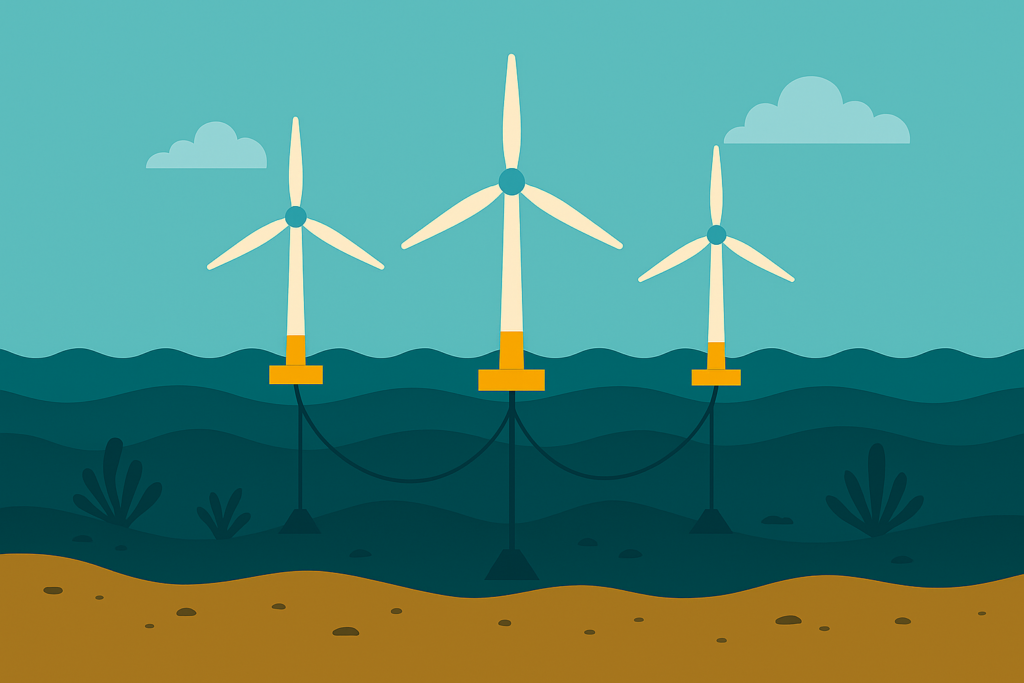
Floating Offshore Wind (FLOW) enables turbines to be deployed without fixed foundations, beneficial in deeper waters or where the seabed can’t be drilled.
Turbines are fully assembled in port, nearer to land, and then towed to the site and secured. Instead of being driven into the seabed, FLOW turbines are attached with flexible mooring systems (catenary, semi-taut, or taut) to anchors on the seafloor.
FLOW is faster to deploy and easier to scale under the right conditions.
This technology unlocks vast new wind resources across challenging geographies: the West of Scotland, the Celtic Sea, California, Japan, South Korea.
But FLOW is complex. Cable dynamics, mooring tensions, and safe tow paths all rely on accurate environmental intelligence – just like traditional fixed-bottom turbines.
Offshore wind is a cornerstone of our journey to net zero. But a turbine is only as powerful as the system behind it; and that system relies on precision. From seabed to substation, success in offshore renewables depends on accurate intelligence: understanding the forces at play above and below the surface, and knowing when and where to act.
Making smarter, data-backed decisions? That’s where NeuWave comes in.
The ocean is unpredictable; offshore planning shouldn’t be…
NeuWave helps offshore teams reduce risk and downtime with regulation-ready MetOcean data. Discover how our tools can optimise your next site, inform safe installation, and directly improve your O&M strategy.